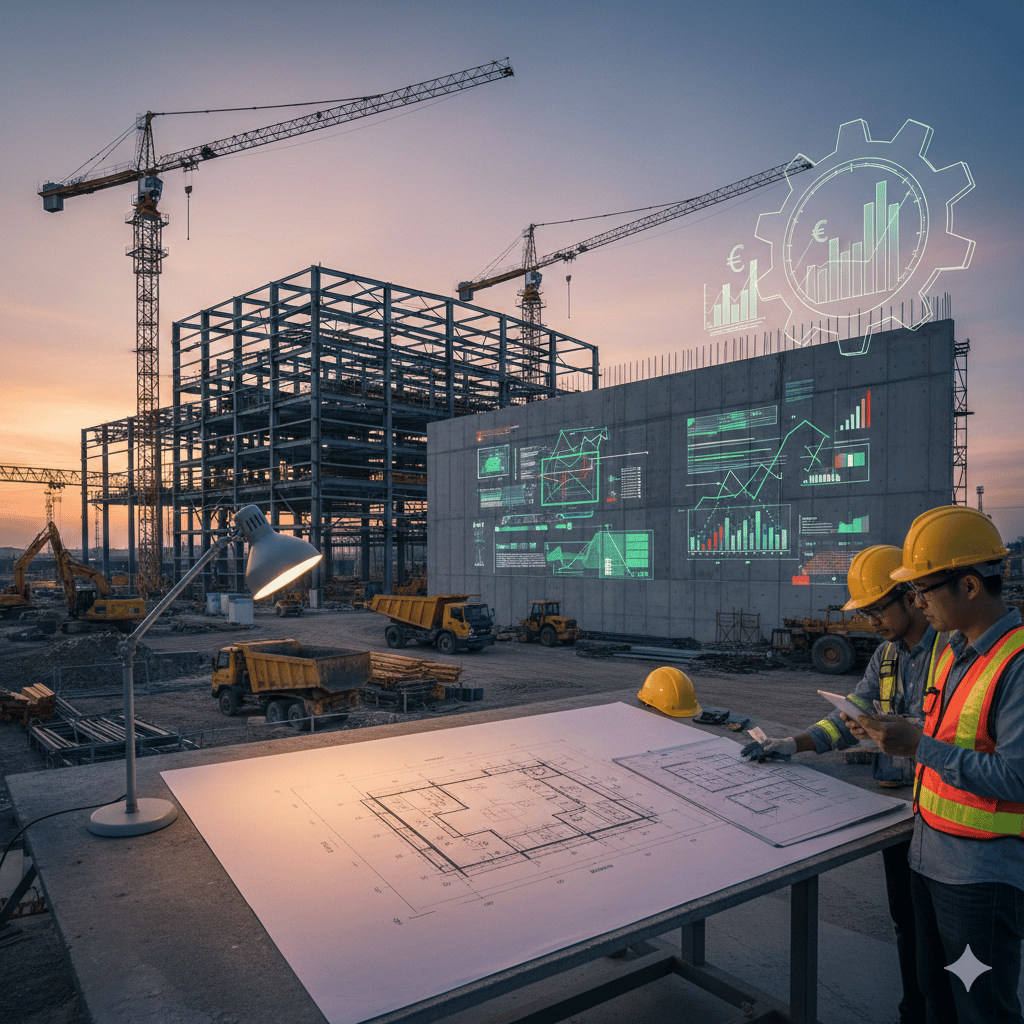
Industrial construction projects are among the most complex and capital intensive developments in the construction industry. Facilities such as factories, manufacturing plants, warehouses, power plants, refineries, and processing units require precise planning, specialized systems, and strict regulatory compliance. At the core of successful industrial construction lies an accurate and well structured industrial estimation process.
Industrial estimation goes far beyond basic cost calculations. It plays a strategic role in cost planning, risk management, scheduling, and decision making throughout the project lifecycle. This guide explains industrial estimation in detail, how it works, why it is critical, and how proper cost planning supports successful industrial construction projects.
What Is Industrial Estimation?

Industrial estimation is the process of calculating the total projected cost of industrial construction projects before construction begins. It includes detailed evaluation of material quantities, labor requirements, equipment usage, subcontractor costs, overhead, contingencies, and profit margins.
Unlike residential or commercial estimation, industrial estimation involves:
- Heavy machinery and specialized equipment
- Complex mechanical and electrical systems
- High safety and regulatory standards
- Long project timelines
- Large scale budgets
Due to these factors, industrial estimation requires advanced technical knowledge and a high level of accuracy.
Importance of Industrial Estimation in Construction
Industrial projects often involve millions or even billions in investment. A small estimation error can lead to major financial losses, schedule delays, or operational inefficiencies.
Accurate industrial estimation helps:
- Establish realistic project budgets
- Support investment and financing decisions
- Control costs throughout construction
- Reduce financial and operational risk
- Improve scheduling and procurement planning
- Prevent disputes and change orders
For industrial developers and contractors, estimation is not optional it is essential.
How Industrial Estimation Differs from Commercial Estimation
While industrial and commercial estimation share similar principles, industrial estimation is far more complex.
Industrial projects typically involve:
- Specialized machinery foundations
- Process piping and automation systems
- High voltage electrical systems
- Strict environmental and safety regulations
- Custom built structures and layouts
Commercial projects focus more on architectural finishes and occupant comfort, whereas industrial projects prioritize functionality, durability, and process efficiency.
Key Components of Industrial Estimation

Industrial estimation is built around several core components that together form a complete project cost picture.
These components include:
- Direct construction costs
- Indirect and overhead costs
- Equipment and machinery costs
- Subcontractor and specialty trade costs
- Contingency allowances
Each component must be carefully evaluated to avoid underestimating the true project cost.
Step 1: Review of Industrial Drawings and Specifications
The industrial estimation process begins with a detailed review of all project documentation, including:
- Architectural and structural drawings
- Mechanical, electrical, and instrumentation plans
- Process flow diagrams
- Equipment layouts and schedules
- Technical specifications and standards
This step ensures the estimator fully understands the scope, systems, and operational requirements of the facility.
Step 2: Defining the Industrial Project Scope
Defining scope is critical in industrial estimation. Industrial projects often involve multiple phases and complex interfaces between systems.
The scope typically includes:
- Site preparation and earthworks
- Foundations and structural works
- Process equipment installation
- Mechanical and piping systems
- Electrical, automation, and control systems
- Safety systems and compliance works
Clear scope definition prevents omissions and misinterpretations during cost planning.
Step 3: Industrial Quantity Takeoffs
Quantity takeoff is the backbone of industrial estimation. It involves detailed measurement of all materials required for construction and installation.
Common industrial takeoff items include:
- Concrete and reinforcement quantities
- Structural steel and fabrication
- Process piping and fittings
- Mechanical equipment foundations
- Cable trays, conduits, and wiring
- Insulation, fireproofing, and coatings
Due to the scale and complexity of industrial facilities, takeoffs must be precise and trade specific.
Step 4: Labor Cost Estimation for Industrial Projects
Labor estimation in industrial construction is more complex than in residential or commercial projects.
Factors considered include:
- Skilled and specialized labor requirements
- Productivity rates for industrial environments
- Shift work and overtime
- Safety and compliance procedures
- Project duration and phasing
Industrial labor costs are often higher due to specialized skills and extended timelines.
Step 5: Equipment and Machinery Cost Planning
Industrial construction relies heavily on large scale equipment and machinery, such as:
- Cranes and lifting systems
- Excavators and earthmoving equipment
- Concrete batching and pumping equipment
- Specialized installation tools
Estimators calculate costs based on rental duration, fuel, maintenance, operators, and mobilization.
Step 6: Material Pricing and Procurement Strategy
Material pricing in industrial estimation accounts for:
- Supplier quotations
- Bulk purchasing benefits
- Transportation and logistics
- Import duties and lead times
Industrial projects often require long lead items, making early procurement planning a critical part of cost estimation.
Step 7: Subcontractor and Specialty Trade Costs
Industrial projects depend heavily on subcontractors for specialized work, including:
- Mechanical installation
- Process piping
- Electrical and instrumentation
- Automation and control systems
- Fire protection and safety systems
Subcontractor pricing is carefully reviewed and integrated into the overall estimate.
Step 8: Indirect Costs, Overhead, and Profit
Beyond direct construction costs, industrial estimates include:
- Project management expenses
- Temporary facilities
- Safety and compliance costs
- Insurance and bonding
- Administrative overhead
Profit margins are calculated based on project risk, complexity, and market conditions.
Step 9: Contingency Planning in Industrial Estimation
Industrial projects face higher risks due to technical complexity and external factors. Contingencies are added to cover:
- Design changes
- Market price volatility
- Site conditions
- Regulatory requirements
Proper contingency planning protects project budgets from unexpected disruptions.
Step 10: Final Industrial Budget Development
All cost elements are compiled into a structured industrial project budget. This budget includes:
- Trade by trade cost breakdowns
- Summary totals
- Assumptions and exclusions
- Risk allowances
The final budget serves as the financial baseline for project execution and cost control.
Industrial Estimation Methods Used
Different estimation methods are applied depending on project stage and data availability.
Preliminary estimates provide early cost forecasts during planning phases.
Detailed estimates are used once designs are finalized and are critical for bidding and execution.
Unit cost estimation applies standardized costs to measured quantities.
Parametric estimation uses historical data and modeling for large industrial facilities.
Role of Technology in Industrial Estimation
Modern industrial estimation relies on digital tools to manage complexity and improve accuracy. These tools help with takeoffs, cost databases, collaboration, and reporting.
Technology also supports better coordination between design teams, estimators, and project managers.
Common Challenges in Industrial Estimation
Industrial estimation faces challenges such as:
- Incomplete or evolving designs
- Price fluctuations for materials and equipment
- Labor shortages
- Regulatory compliance requirements
- Long project timelines
Experienced estimation practices help mitigate these challenges and reduce risk.
Benefits of Accurate Industrial Cost Planning
Accurate industrial estimation supports:
- Better investment decisions
- Improved cost control
- Reduced project risk
- Efficient scheduling and procurement
- Higher project success rates
It enables stakeholders to move forward with confidence and clarity.
How ACE Services Can Help
The ACE Services provides professional industrial estimation solutions designed to support accurate cost planning and informed decision making. Our experienced estimators analyze complex industrial drawings, perform detailed quantity takeoffs, and prepare comprehensive cost estimates aligned with current market conditions.
By working with ACE Services, contractors and industrial developers gain reliable budgets, reduced financial risk, improved bid accuracy, and stronger control over industrial construction costs.
Conclusion
Industrial estimation is a critical element of successful industrial construction projects. From early planning to final budgeting, accurate estimation ensures financial control, reduces risk, and supports efficient project execution. Due to the complexity and scale of industrial facilities, professional estimation practices are essential.
By understanding how industrial estimation works and applying structured cost planning methods, stakeholders can deliver industrial projects that meet budget expectations and operational goals with confidence.
Frequently Asked Question
What is industrial estimation in construction?
Industrial estimation is the process of calculating material, labor, equipment, and overhead costs for large-scale industrial construction projects such as factories, plants, warehouses, and power facilities.
Why is industrial estimation important?
Industrial estimation helps project owners and contractors plan budgets accurately, control costs, reduce financial risks, and ensure projects are completed within budget.
What types of projects require industrial estimation?
Industrial estimation is required for manufacturing plants, oil and gas facilities, warehouses, refineries, power plants, and heavy infrastructure projects.
What costs are included in industrial estimation?
It typically includes material costs, labor costs, equipment expenses, subcontractor pricing, indirect costs, contingency allowances, and overhead expenses.
How is industrial estimation different from commercial estimation?
Industrial estimation involves more complex systems, specialized equipment, higher safety requirements, and larger budgets compared to standard commercial projects.