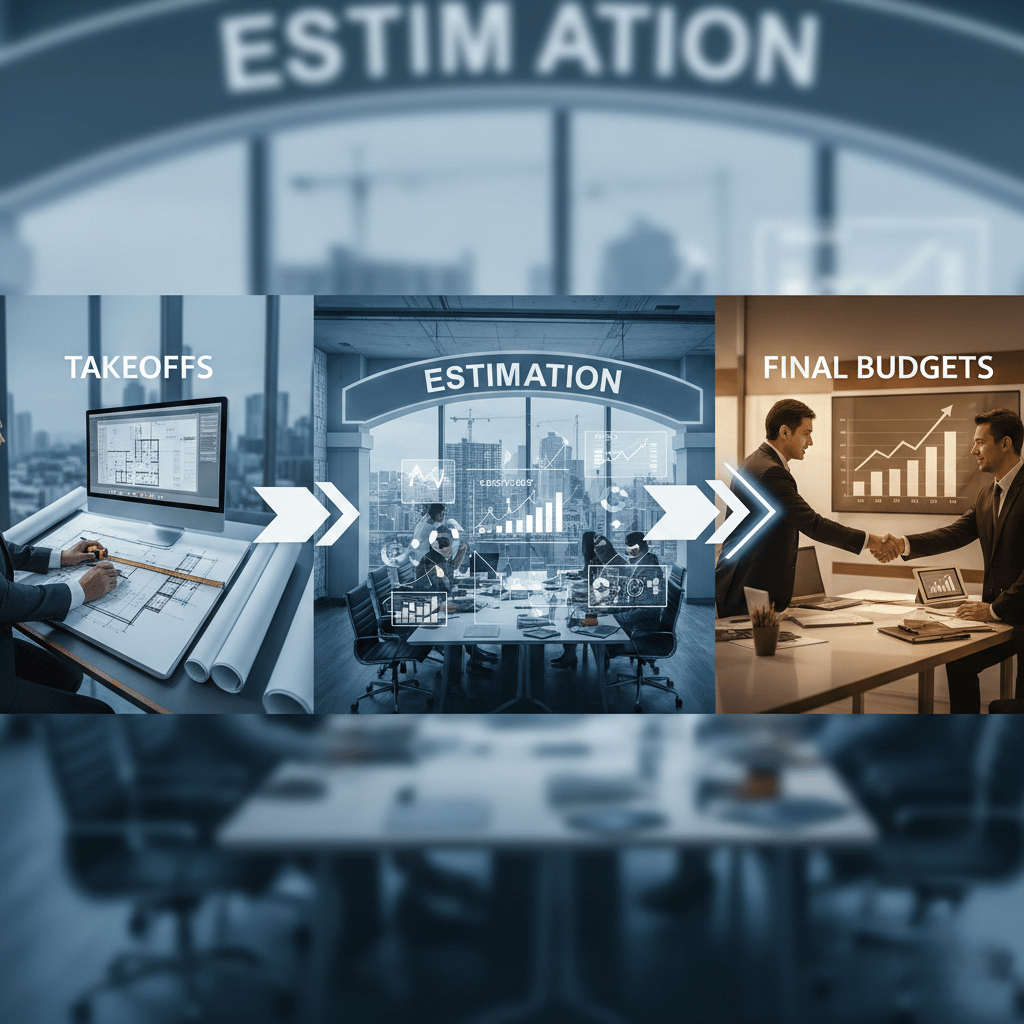
Commercial construction projects are significantly more complex than residential builds. Offices, warehouses, retail centers, hotels, hospitals, and industrial facilities involve large budgets, multiple stakeholders, strict regulations, and long timelines. At the heart of every successful commercial project lies a well prepared and accurate commercial estimation process.
Commercial estimation is not just about calculating costs; it is a strategic planning tool that guides decision making from the earliest design stages to final project execution. This guide explains the complete commercial estimation process, from initial quantity takeoffs to finalized construction budgets, and why it is essential for cost control and project success.
What Is Commercial Estimation?
Commercial estimation is the process of determining the total anticipated cost of a commercial construction project before construction begins. It includes detailed calculations for materials, labor, equipment, subcontractors, overhead, profit, and contingencies.
Unlike residential estimation, commercial estimation requires a much higher level of detail, coordination, and accuracy due to larger scopes of work, complex systems, and regulatory requirements.
Why Commercial Estimation Is Critical
Commercial construction projects involve substantial financial investments. Even small errors in estimation can result in major cost overruns, schedule delays, and contractual disputes.
Accurate commercial estimation helps:
- Establish realistic project budgets
- Secure financing and investor approval
- Prepare competitive and profitable bids
- Control costs throughout construction
- Reduce financial risk
- Improve project planning and scheduling
Without proper estimation, commercial projects are vulnerable to unexpected expenses and reduced profitability.
Key Differences Between Commercial and Residential Estimation
While both follow similar principles, commercial estimation differs in several important ways.
Commercial projects involve:
- Larger quantities of materials
- Specialized construction systems
- Multiple subcontractors
- Strict building codes and compliance
- Longer construction durations
- Higher financial risk
As a result, commercial estimates must be more detailed, structured, and carefully reviewed compared to residential estimates.
Overview of the Commercial Estimation Process
The commercial estimation process follows a systematic workflow to ensure accuracy and completeness. Each step builds upon the previous one, leading from raw project data to a finalized construction budget.
The main stages include:
- Reviewing drawings and specifications
- Defining project scope
- Performing quantity takeoffs
- Estimating labor costs
- Pricing materials
- Calculating equipment costs
- Incorporating subcontractor pricing
- Adding overhead, profit, and contingencies
- Finalizing the budget
Step 1: Reviewing Drawings and Specifications
The first step in commercial estimation is a detailed review of all available project documents. These typically include:
- Architectural drawings
- Structural plans
- Mechanical, electrical, and plumbing (MEP) drawings
- Project specifications
- General notes and schedules
This review helps estimators understand the project design, materials, quality standards, and construction methods. Any inconsistencies, missing details, or ambiguities are identified early to avoid errors later in the estimation process.
Step 2: Defining the Scope of Work
Clearly defining the scope of work is essential for accurate commercial estimation. The scope outlines exactly what is included and excluded in the project.
This includes:
- Site preparation and earthwork
- Structural components
- Building envelope
- Interior finishes
- MEP systems
- External works and utilities
A well defined scope prevents misunderstandings and ensures that all cost components are accounted for.
Step 3: Quantity Takeoffs
Quantity takeoff is the foundation of the commercial estimation process. It involves measuring and listing all materials required to complete the project.
Typical takeoff items include:
- Concrete volumes
- Reinforcement steel
- Structural steel
- Masonry and drywall
- Flooring and ceiling finishes
- Doors and windows
- Electrical and plumbing fixtures
In commercial projects, quantity takeoffs are highly detailed and trade specific due to the scale and complexity of work.
Step 4: Labor Cost Estimation
Labor costs represent a significant portion of commercial construction budgets. Estimating labor involves calculating:
- Required workforce size
- Labor productivity rates
- Work durations
- Skill levels and trade specialties
Commercial projects often involve union labor, specialized trades, and complex installation requirements, making labor estimation more challenging than in residential construction.
Step 5: Material Cost Pricing
Material pricing is based on:
- Supplier quotes
- Market rates
- Location factors
- Bulk purchasing considerations
Price fluctuations, supply chain issues, and delivery timelines are carefully considered, especially for large commercial developments where material costs can change significantly over time.
Step 6: Equipment and Machinery Costs
Commercial construction frequently requires heavy machinery and specialized equipment, such as:
- Cranes
- Excavators
- Concrete pumps
- Lifts and scaffolding
Estimators calculate equipment costs based on rental duration, ownership costs, fuel, maintenance, and operator wages.
Step 7: Subcontractor Pricing
Most commercial projects rely on subcontractors for specialized work, including:
- Electrical systems
- Plumbing installations
- HVAC systems
- Fire protection
- Elevators and automation systems
Subcontractor quotes are reviewed, compared, and incorporated into the estimate to ensure accuracy and competitiveness.
Step 8: Indirect Costs, Overhead, and Profit
Beyond direct construction costs, commercial estimates include indirect expenses such as:
- Office and administrative costs
- Insurance and bonding
- Permits and fees
- Project management expenses
Profit margins are added based on project risk, market conditions, and company objectives.
Step 9: Contingency Allowances
Contingencies are included to account for unforeseen conditions, design changes, or market fluctuations. Commercial projects typically require higher contingency percentages due to increased complexity and risk.
Step 10: Final Budget Compilation
The final stage of commercial estimation is compiling all costs into a structured and transparent budget. This budget provides:
- Trade by trade cost breakdowns
- Summary totals
- Assumptions and exclusions
- Cost comparisons and alternatives
This finalized budget serves as the financial roadmap for the entire project.
Commercial Estimation Methods Used
Several estimation methods are used depending on project stage and data availability.
Preliminary estimates provide early cost projections during concept or design stages. These are based on historical data and cost per square foot models.
Detailed estimates are prepared once drawings are complete and are used for bidding and final budgeting.
Unit cost estimation applies standardized costs to measured quantities and is commonly used in commercial projects.
Parametric estimation uses statistical relationships and historical data to predict costs for large scale developments.
Tools and Technology in Commercial Estimation
Modern commercial estimation relies on digital tools to improve accuracy and efficiency. These tools help estimators perform takeoffs, organize data, and apply pricing more effectively.
Technology also enables better collaboration between estimators, contractors, and project stakeholders.
Common Challenges in Commercial Estimation
Commercial estimation faces several challenges, including:
- Incomplete or changing designs
- Market price volatility
- Labor shortages
- Regulatory compliance
- Coordination between multiple trades
Professional estimation practices help minimize these challenges and reduce project risk.
Importance of Accurate Commercial Estimation
Accurate commercial estimation ensures:
- Better financial planning
- Improved bidding success
- Reduced cost overruns
- Stronger cash flow control
- Higher project profitability
It also builds trust between contractors, clients, and investors.
How ACE Services Can Help
The ACE Services provides professional commercial estimation solutions designed to support accurate budgeting and confident decision making. Our experienced estimators perform detailed quantity takeoffs, analyze drawings and specifications, and prepare comprehensive cost estimates aligned with current market rates.
By working with ACE Services, contractors and developers gain reliable estimates, improved bid accuracy, reduced financial risk, and greater control over commercial construction budgets.
Conclusion
The commercial estimation process is a critical component of successful construction planning. From initial quantity takeoffs to finalized project budgets, each step plays a vital role in controlling costs and reducing risk. Due to the scale and complexity of commercial projects, accurate and professional estimation is essential.
By understanding how commercial estimation works and following a structured estimation process, contractors and developers can improve project outcomes, protect profitability, and deliver commercial projects with confidence and clarity.
FAQs
What is commercial estimation in construction?
Commercial estimation is the process of calculating the total cost of commercial construction projects, including materials, labor, equipment, subcontractors, overhead, and contingencies.
How is commercial estimation different from residential estimation?
Commercial estimation involves larger project scopes, complex systems, strict regulations, and higher accuracy requirements compared to residential construction.
What are quantity takeoffs in commercial estimation?
Quantity takeoffs involve measuring and listing all materials and resources required for a commercial construction project based on drawings and specifications.
Why are contingencies important in commercial estimation?
Contingencies account for unforeseen conditions, design changes, and market fluctuations, helping reduce financial risk in commercial projects.
Who prepares commercial construction estimates?
Commercial estimates are prepared by professional estimators, quantity surveyors, or construction estimation companies with experience in large-scale projects.