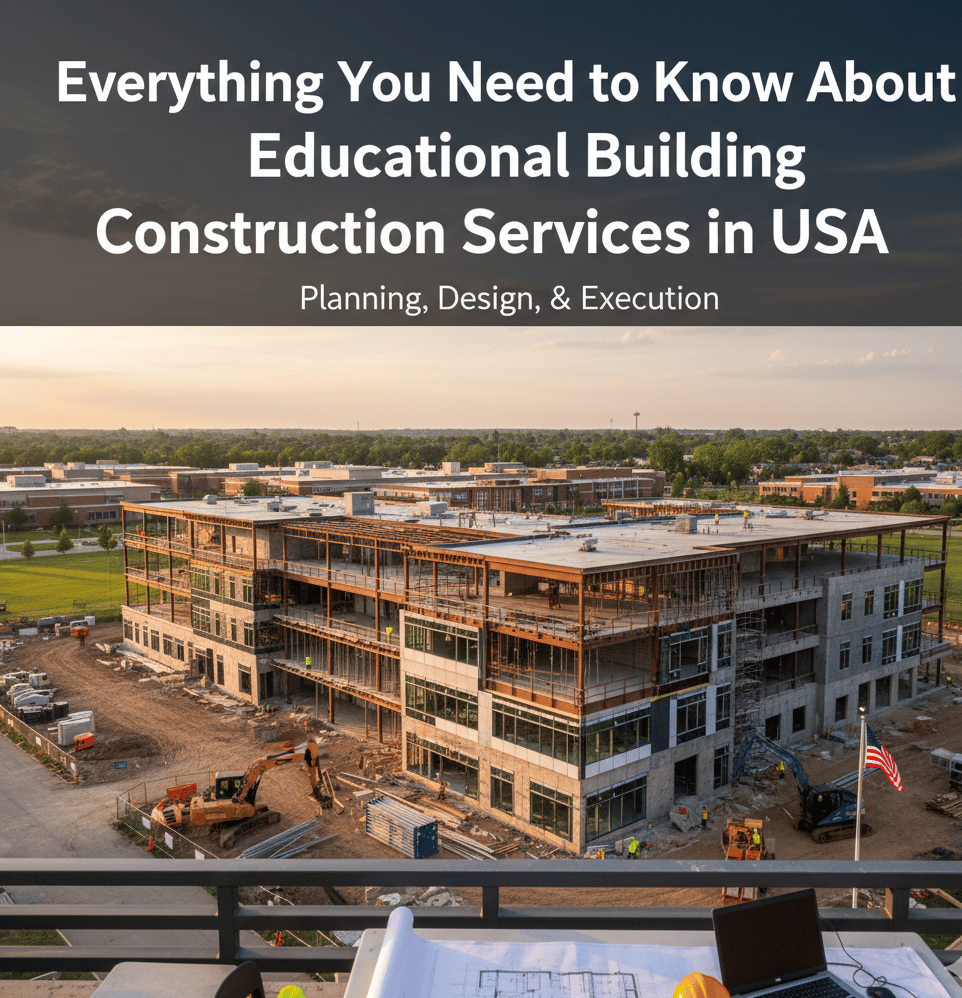
Education is one of the strongest pillars of any nation, and in the United States, the demand for modern, safe, and innovative educational spaces continues to grow.
Schools, colleges, and universities are no longer just about classrooms and blackboards, they are about technology-enabled learning, sustainable designs, safe environments and spaces that inspire creativity.
This shift in learning environments has created a major demand for educational building construction services in USA. These services go far beyond regular construction: they focus on building campuses and facilities that meet modern educational needs while ensuring compliance with strict regulations and future-ready infrastructure.
In this article, we’ll explore what educational building construction services are; why they matter.
How the process works, costs involved, challenges faced and why professional expertise is critical for creating learning environments that are safe, efficient, and profitable for institutions.
What Are Educational Building Construction Services?
Educational building construction services include the planning, design and construction of schools, colleges, universities, training centers, and research facilities. Unlike commercial or residential buildings, educational facilities require specialized designs to support learning, safety, and accessibility.
These services cover:
- Feasibility studies and planning: analyzing student needs, community demand, and project goals.
- Site selection and preparation: choosing land that is safe, accessible, and future ready.
- Architectural design: creating classrooms, labs, libraries, and sports facilities that encourage learning.
- Regulatory compliance: meeting state and federal codes for fire safety, accessibility (ADA), and environmental standards.
- Construction management: ensuring the project is delivered on time and within budget.
- Technology integration: adding smart classrooms, security systems, and campus-wide connectivity.
- Sustainable design: incorporating eco-friendly practices like solar power, natural ventilation, and green spaces.
Why Educational Building Construction Services Matter
Education is changing rapidly in the USA. Schools and universities face pressure to provide world-class facilities that prepare students for the future. Construction services play a vital role because they:
- Support Modern Learning: Smart classrooms, labs, and technology-enabled spaces improve learning outcomes.
- Ensure Safety and Compliance: U.S. codes and regulations are strict, and professional construction ensures compliance.
- Promote Sustainability: Energy-efficient designs save costs and promote eco-friendly values.
- Boost Community Development: Educational facilities often become community hubs for sports, events, and learning.
- Enhance Institutional Reputation: Modern campuses attract students, faculty, and partnerships, making institutions more competitive.
The Process of Educational Building Construction in USA
Developing an educational facility requires multiple phases. Here’s a breakdown:
1. Feasibility Study and Planning
The first step is research:
- How many students will the institution serve?
- What facilities are required (labs, sports grounds, auditoriums)?
- What budget and financing are available?
2. Site Selection and Land Preparation
The location must be safe, accessible by roads or public transport and large enough for future expansion.
3. Design and Architectural Planning
Educational buildings are designed differently than offices or homes. They require:
- Spacious classrooms with natural light;
- Science and computer labs
- Libraries, auditoriums, and student lounges
- Sports grounds and gymnasiums
- Accessibility features for differently abled students.
4. Budgeting and Financing
Construction firms help estimate costs and plan funding. This includes construction, equipment, furniture and long-term maintenance.
5. Regulatory Approvals
Compliance is one of the most critical stages. This includes:
- Fire safety certifications;
- ADA (Americans with Disabilities Act) compliance;
- Environmental impact assessments;
- Zoning and building permits.
6. Construction and Project Management
This stage involves:
- Structural development
- Utility installations (electricity, plumbing, HVAC)
- Interior finishing
- Playground and landscape construction.
7. Technology Integration
Modern campuses require:
- Smart boards and AV systems;
- Wi-Fi across the campus;
- Digital security and surveillance systems;
- Energy-saving automation.
8. Post-Construction Services
Before opening, institutions test all systems, hire staff and set up maintenance protocols.
Key Features of Modern Educational Facilities
Educational buildings today focus on innovation, safety and comfort. Common features include:
- Flexible classrooms: able to adapt to different teaching styles.
- Collaborative spaces: open lounges and group study areas.
- STEM and research labs: equipped with the latest technology.
- Libraries with digital integration: e-learning hubs and study areas.
- Sports and wellness centers: promoting physical health.
- Green designs: natural ventilation, solar panels, and recycling systems.
- Safety and security systems: surveillance, alarms, and controlled access.
Cost of Educational Building Construction in USA
The cost varies widely depending on type, size, and location:
- Primary/secondary schools: $200–$300 per square foot.
- Colleges/universities: $300–$500 per square foot.
- Specialized labs/research centers: $500+ per square foot.
Additional costs include land purchase, permits, technology and long-term maintenance planning.
Challenges in Educational Building Construction
While rewarding, these projects face challenges such as:
- High costs: due to specialized materials and technologies.
- Lengthy permitting processes: for safety and environmental approvals.
- Changing educational needs: requiring flexible designs.
- Construction delays: caused by weather, labor shortages, or supply chain issues.
- Budget overruns: if not managed properly.
Professional construction services help reduce risks by managing costs, timelines, and compliance efficiently.
Trends in Educational Building Construction in USA
The education sector is evolving with new construction trends:
- Smart campuses: integrating IoT and AI into classrooms.
- Sustainable buildings: eco-friendly designs with green certifications.
- Flexible spaces classrooms that can be rearranged for multiple uses.
- Hybrid learning spaces: designed for both physical and digital teaching.
- Community-focused schools serving as centers for education and local events.
Sustainability in Educational Construction
Sustainability is a major factor in U.S. construction. Eco-friendly schools not only save costs but also teach students about responsible living.
Popular green practices include:
- Solar and renewable energy systems;
- Rainwater harvesting;
- Recycled and low-emission materials;
- Energy-efficient lighting and ventilation;
- Landscaping with native plants.
Sustainable schools often achieve LEED (Leadership in Energy and Environmental Design) certification: improving both value and reputation.
How Construction Services Help Build Profitable Educational Projects
While education is a social service, institutions must also be financially sustainable. Professional services ensure profitability by:
- Efficient Design: Reducing operating costs through smart layouts.
- Energy Savings: Lowering long-term bills with sustainable solutions.
- Higher Enrollment: Attracting students with modern facilities.
- Community Engagement: Schools that double as event centers bring extra income.
- Scalability: Future-ready campuses reduce renovation costs.
Why Choose Professional Educational Building Construction Services
Working with professionals ensures:
- End-to-end management: from planning to handover.
- Compliance expertise: meeting all U.S. safety and accessibility codes.
- Customized designs: tailored to institutional needs.
- Technology integration: future proof campuses.
- On-time delivery: avoiding delays and overruns.
Professional construction is not just about building—it’s about creating an environment where learning thrives.
Conclusion
Educational buildings in the USA are more than just walls and classrooms; they are spaces that shape the future of society.
Professional educational building construction services in USA ensure that these spaces are safe; sustainable and inspiring for students and teachers alike.
From planning and compliance to technology integration and sustainability expert services help institutions create campuses that are not only functional but also financially sustainable and future-ready.
If you’re planning to develop or renovate an educational facility, working with professional construction experts ensures that your project meets the highest standards of safety, innovation and profitability.
FAQs
How long does it take to build a school in the USA?
Usually 1224 months, depending on size and permits.
What is the cost per square foot for educational buildings?
$200–$500+, based on type (school, college, or research center).
Do U.S. schools need ADA compliance?
Yes, all educational facilities must follow accessibility laws.
Can older schools be renovated instead of rebuilt?
Yes, many institutions modernize existing campuses with renovation services.
How important is sustainability in school construction?
Very important, saves costs and enhances institutional reputation.