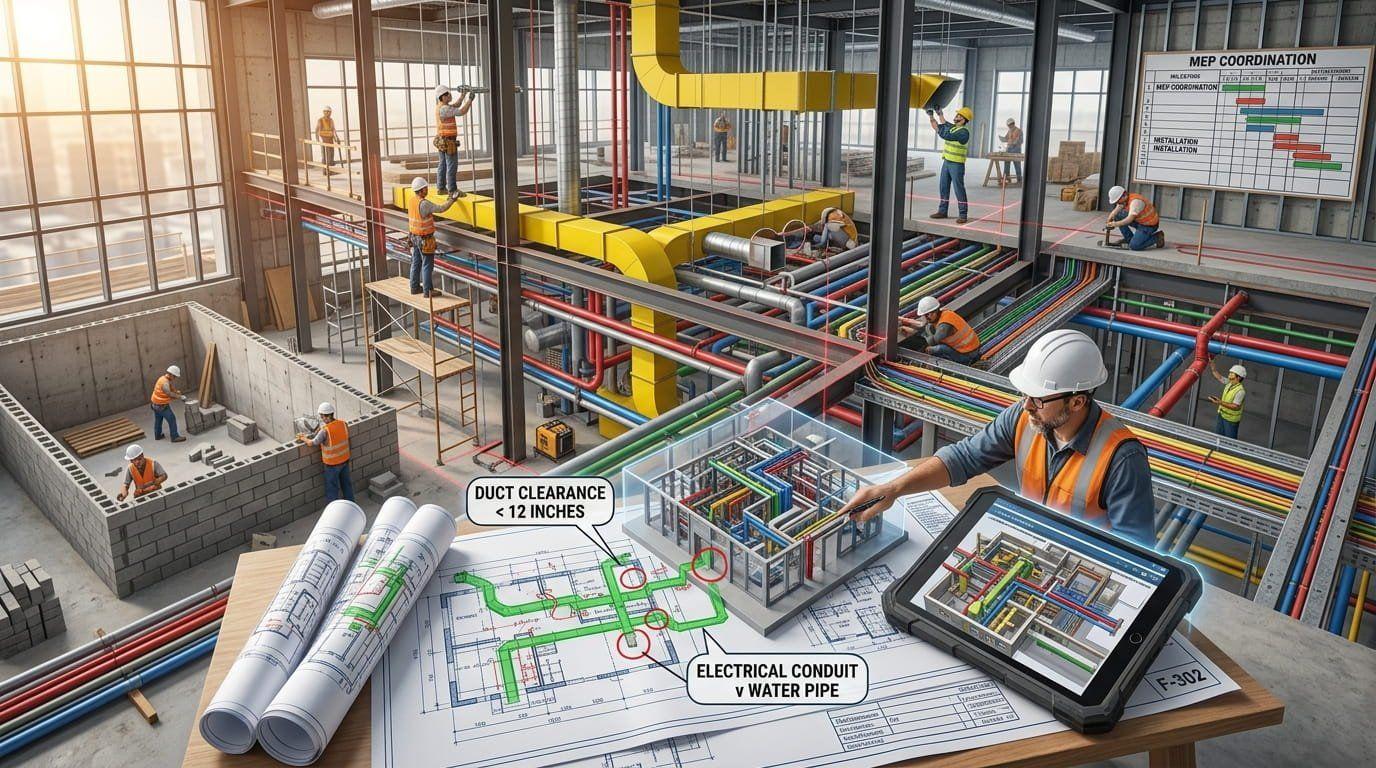
MEP coordination is the process of aligning a building’s mechanical, electrical, and plumbing systems with each other and with the structural and architectural design, so that ductwork, conduit, and piping don’t physically clash once construction begins. Poor MEP coordination is one of the leading causes of RFIs, change orders, and field rework, research from Dodge Construction Network found coordination issues were the primary quality challenge for 33% of contractors, driving an average 9% increase in project budgets. Here’s how MEP coordination actually works, and why it needs to happen long before anyone picks up a tool.
What Does MEP Stand For?
- Mechanical: HVAC systems, air handling units, ductwork, chillers, boilers, and controls
- Electrical: utility service, switchgear, distribution, lighting, and fire alarm systems
- Plumbing: domestic water, sanitary waste and vent, storm drainage, and gas lines
Why MEP Systems Need to Be Coordinated With Structural Design
Mechanical, electrical, and plumbing systems all compete for the same physical space, inside walls, ceilings, floor assemblies, and mechanical rooms, alongside structural framing. A duct run that crosses a structural beam is inexpensive to fix on a drawing; discovered in the field, it can mean cutting into approved framing or re-routing an entire system. This is why structural engineering and MEP design have to be developed together, not handed off sequentially.
The MEP Coordination Process, Step by Step
- Design phase: system layouts and load calculations are developed, establishing space and performance requirements
- Schematic coordination: architecture, structural, and MEP disciplines position their systems within the shared building envelope
- Clash detection: drawings or BIM models are reviewed to catch spatial conflicts between systems before they reach the field
- Resolution & sign-off: conflicts are resolved and designs are finalized across all disciplines
- Shop drawing production: coordinated MEP shop drawings are issued for fabrication and installation
What Happens When MEP Coordination Fails
Uncoordinated MEP design doesn’t just cause isolated rework, it cascades. A duct that has to be rerouted mid-installation can delay dependent trades, push a task past its float, and put pressure on the project’s critical path. If you want to understand how a single delay ripples through the schedule, see our guide to CPM scheduling in construction, and how procurement coordination compounds the problem when replacement materials are also long-lead items.
How The ACE Services Approaches MEP Coordination
Our Structural Engineering & MEP Design team develops structural design and analysis alongside coordinated MEP shop drawings, checked against the International Building Code (IBC) and ASCE 7 load standards from the start, not reconciled after the fact. Professional Engineer (PE) review and sealing is available where required by state and local jurisdiction.
Frequently Asked Questions
Q: What is the difference between MEP coordination and MEP design?
A: MEP design is the initial engineering of the mechanical, electrical, and plumbing systems, while MEP coordination is the follow-up process of checking that those designs physically fit together with the structure and each other before construction begins.
Q: Who is responsible for MEP coordination on a project?
A: Responsibility typically falls to the general contractor or a dedicated engineering and coordination team, working with input from the architect, structural engineer, and MEP subcontractors to resolve clashes before shop drawings are finalized.
Q: Does MEP coordination require a licensed engineer?
A: Structural elements of MEP coordination, and any stamped MEP design documents, generally require review by a licensed Professional Engineer, particularly for load-bearing penetrations or life-safety systems, subject to state and local requirements.
Related Reading
- What Is CPM Scheduling in Construction? Critical Path Method Explained
- Shop Drawings vs. Construction Drawings vs. Permit Sets: What’s the Difference?
Get Started
Avoid costly field clashes before they happen. Request your free structural engineering & MEP design quote and get coordinated documentation back in 7-10 business days.