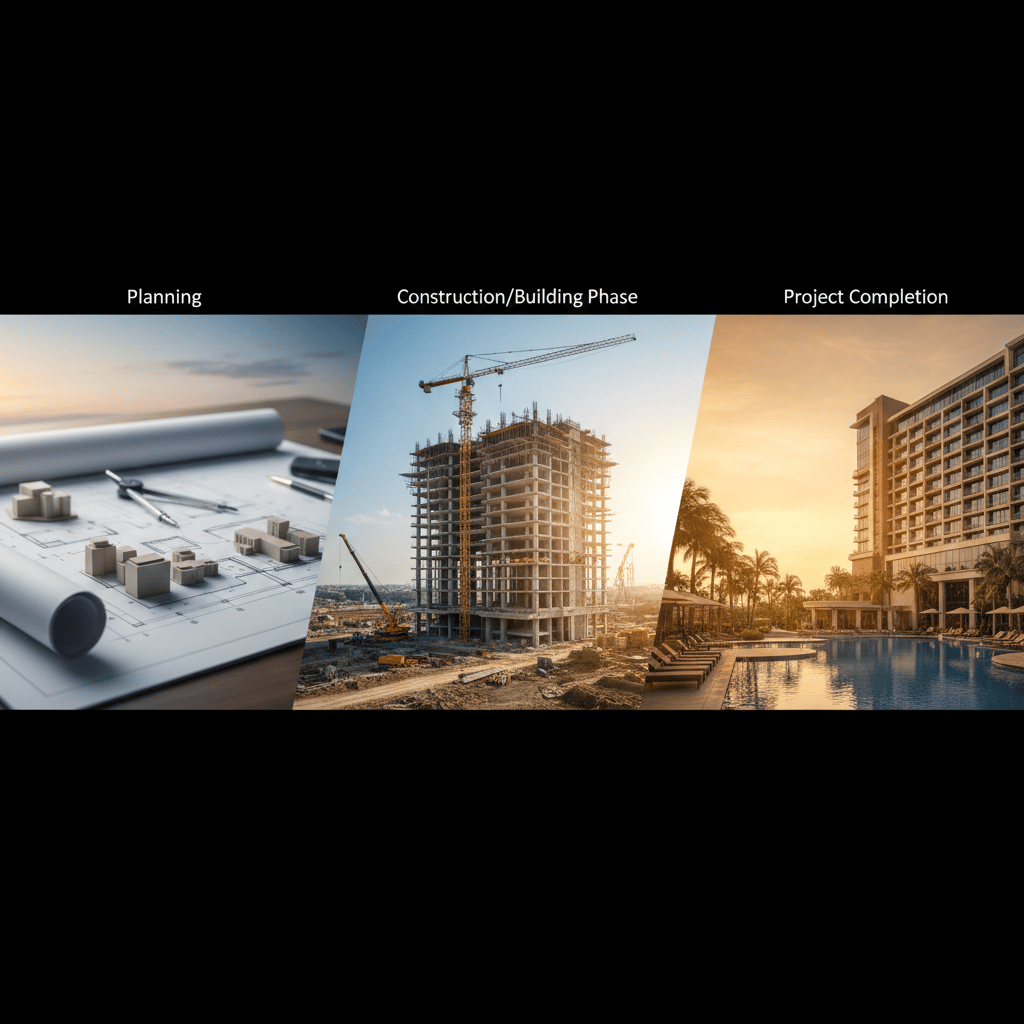
The hospitality industry depends on carefully planned and professionally executed construction projects. Whether it is a boutique hotel, business hotel, or luxury resort, success depends on more than architectural design alone. Hotel development services provide the structured approach needed to manage planning, design, budgeting, construction, and delivery efficiently.
Hotel projects involve complex coordination, strict timelines, high investment costs, and guest focused design requirements. This makes hotel development services essential for developers, investors, and hospitality brands looking to deliver successful projects. This guide explains hotel development services from early planning to final project completion.
What Are Hotel Development Services?
Hotel development services are professional services that support the complete lifecycle of a hotel project. These services integrate feasibility studies, cost planning, design coordination, construction management, and financial control to ensure the project is delivered successfully.
Unlike standard construction projects, hotel developments require specialized knowledge of hospitality operations, brand standards, guest experience, and long-term asset performance. Hotel development services address these unique requirements through detailed planning and expert oversight.
Why Hotel Development Services Are Important
Hotel projects involve high financial risk and operational complexity. Hotel development services help reduce these risks by providing structured management and expert guidance.
Key reasons these services are important include:
- Better cost predictability and financial control
- Reduced design and construction risks
- Improved coordination between stakeholders
- Compliance with hospitality brand standards
- Timely project delivery
These benefits help developers protect their investment while delivering high quality hospitality assets.
Phase 1: Planning and Feasibility
Market and Feasibility Studies
The first step in hotel development services is assessing project feasibility. Market studies analyze demand, competition, occupancy rates, and revenue potential. This ensures the hotel concept aligns with market conditions.
Site Selection and Evaluation
Location is critical for hotel success. Development professionals evaluate zoning, accessibility, utilities, environmental factors, and infrastructure availability to determine site suitability.
Initial Budget and Financial Planning
Preliminary budgets are prepared to estimate construction costs, operational expenses, and expected returns. This helps investors determine whether to move forward with the project.
Phase 2: Concept Design and Planning
Concept Development
Concept design defines the hotel’s layout, room mix, amenities, and guest flow. Hotel development services ensure design decisions support both guest experience and operational efficiency.
Brand Integration
Hotels often operate under international or regional brands. Development services ensure that brand standards, room sizes, finishes, and operational requirements are incorporated early in the design.
Preliminary Cost Planning
As designs take shape, cost plans are refined to ensure the project remains within budget. Early cost planning helps avoid expensive design changes later.
Phase 3: Detailed Design and Engineering
Design Coordination
Hotel development services coordinate architectural, structural, mechanical, electrical, and plumbing designs. This reduces conflicts and improves construction efficiency.
Regulatory Compliance
Hotel projects must meet building codes, fire safety regulations, accessibility requirements, and local authority approvals. Development teams manage this process to avoid delays.
Value Engineering
Value engineering identifies opportunities to reduce costs without affecting quality or guest experience. This step is essential for cost-efficient hotel development.
Phase 4: Procurement and Contractor Selection
Tender Documentation
Clear and detailed tender documents are prepared, including drawings, specifications, and scopes of work. This ensures accurate pricing from contractors.
Bid Evaluation
Hotel development services analyze contractor bids for cost, experience, and capability. Selecting the right contractor is critical for quality and schedule control.
Contract Strategy
Development professionals advise on contract types and risk allocation, helping protect the client’s financial interests.
Phase 5: Construction and Project Management
Construction Oversight
During construction, hotel development services monitor progress, quality, and compliance with design requirements. This ensures work is executed as planned.
Cost Monitoring and Reporting
Regular cost reports track expenses against the approved budget. This allows early identification of potential overruns and corrective action.
Quality Control
Hotels require high standards due to guest facing operations. Development services ensure finishes, systems, and workmanship meet hospitality expectations.
Phase 6: Commissioning and Project Completion
Testing and Commissioning
All building systems, including HVAC, electrical, plumbing, and safety systems, are tested to ensure proper operation.
Final Inspections
Final inspections confirm regulatory compliance and contract completion. Required approvals and certifications are obtained.
Project Handover
The completed hotel is handed over with documentation, warranties, and operational manuals, allowing smooth transition to operations.
Benefits of Hotel Development Services
Cost Efficiency
Accurate budgeting and ongoing cost control reduce financial risk.
Risk Management
Professional oversight minimizes delays, disputes, and design errors.
Operational Success
Design decisions support long-term hotel operations and guest satisfaction.
Timely Delivery
Structured project management helps meet critical opening dates.
Common Challenges in Hotel Development
Hotel projects often face challenges such as fluctuating material prices, regulatory delays, complex stakeholder coordination, and brand compliance. Hotel development services address these challenges through proactive planning and expert management.
Long Term Value of Hotel Development Services
Beyond construction, these services contribute to long term asset performance. Well planned hotels achieve better operational efficiency, higher occupancy rates, and stronger returns on investment.
How ACE SERVICES Can Help
THE ACE SERVICES provides professional hotel development services to support hospitality projects at every stage. Our team assists with feasibility studies, cost estimation, quantity takeoffs, budgeting, and construction cost control.
By combining industry expertise with accurate financial management, Ace Services helps hotel developers achieve cost efficiency, quality execution, and timely project completion.
Conclusion
Hotel development services are essential for delivering successful hospitality projects. From early planning and feasibility analysis to construction management and final handover, these services provide the expertise and structure needed to manage complexity and control costs.
For developers and investors, working with experienced hotel development professionals ensures projects are completed efficiently and positioned for long term success.
Frequently Asked Questions
What are hotel development services?
Hotel development services include planning, feasibility studies, design coordination, cost management, construction oversight, and project delivery for hotel projects.
Why are hotel development services important?
They help control costs, reduce risks, ensure brand compliance, and deliver hotel projects on time and within budget.
When should hotel development services be involved?
Ideally, hotel development services should be involved from the early planning and feasibility stage through construction and project completion.
Are hotel development services suitable for small hotels?
Yes, hotel development services are suitable for projects of all sizes, including boutique, mid-scale, and large hospitality developments.
How do hotel development services help manage project costs?
They provide accurate cost estimates, budgeting, value engineering, and continuous cost monitoring throughout construction.